
Understanding how school funding works can feel overwhelming, even for people who are around schools every day. So, we are trying to make it a little easier.
Franklin Township Community School Corporation has launched a new video series, Flash Finances from Fred, to break things down in a way that is clear, quick, and actually useful. You can find the series on the FTCSC website at www.ftcsc.org. Just click the “Flash Finances” icon on the homepage to explore more about how our schools are funded.
In the series, FTCSC Chief Operating Officer and Treasurer Fred McWhorter walks through school finances in short, straightforward videos. The first episode introduces what he calls the “3-2-1” approach to understanding school funding, starting with the three primary funds that support the district.
“These topics can be complex,” McWhorter said. “So we’re working to simplify them and make them easier to understand.”
So, let’s start with the “3.”
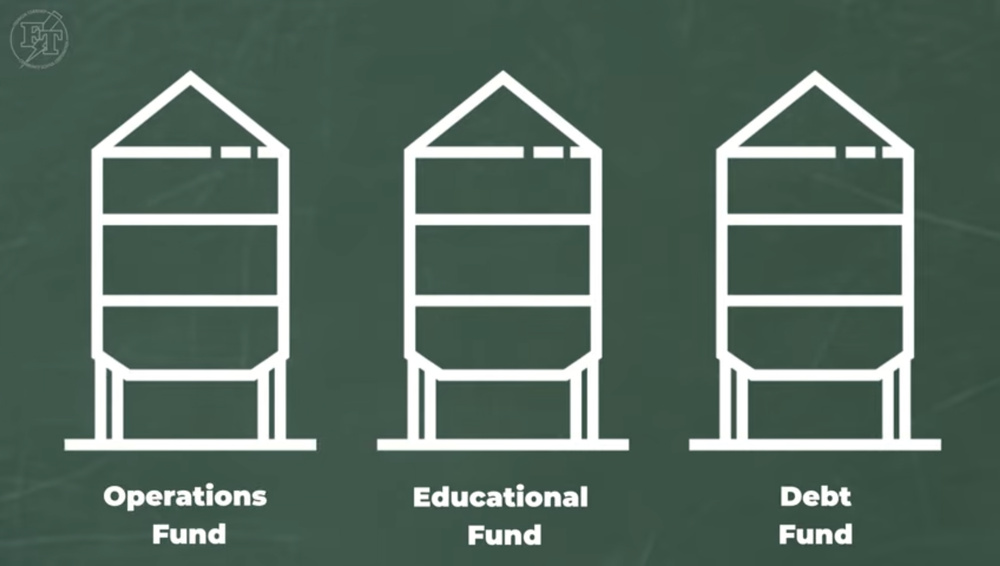
Fred explains that school finances in Indiana are built around three main funds: the Education Fund, the Operations Fund, and the Debt Service Fund. Each one has a specific purpose, and understanding how they work and do not work together will go a long way in making sense of school budgets.
The Education Fund is where classroom learning lives. It is driven by a student-based funding formula, meaning enrollment directly impacts how much funding the district receives. More students mean more funding; fewer students mean less. This fund supports teacher salaries and benefits, as well as instructional materials, supplies, and services directly tied to student learning.
The Operations Fund, think day-to-day operations, covers what keeps schools running. Utilities, transportation, building maintenance, custodial services, and administrative costs all fall under this category. As Fred explains in the video, this fund works behind the scenes so teachers can stay focused on students.
Then there is the Debt Service Fund, which is reserved exclusively for long-term investments such as construction projects and major equipment. By law, this funding can be used only for capital expenses, not for salaries, classroom resources, or operational costs.
That is why the Debt Service Fund creates one of the most common questions: “A lot of times people ask why we can afford to do a construction project but can’t use that money for teacher salaries or other classroom needs,” McWhorter said. “The answer is that these funds are separate and distinct; we cannot mix them.”
And really, that is the key takeaway: each fund has a specific job and serves a specific purpose.
Through the Flash Finances from Fred series, FTCSC hopes to increase transparency in school funding and give the Franklin Township residents a clearer picture of how it all works.
As Fred shared, “Our goal is to make school finance as easy as ‘3-2-1.’
#PurposefulLearning
#WeAreFlashes